
Services
Cron Job & Scheduled Task Management
Automate reporting, data synchronization, backups and maintenance reliably with cron jobs and scheduled task infrastructure.
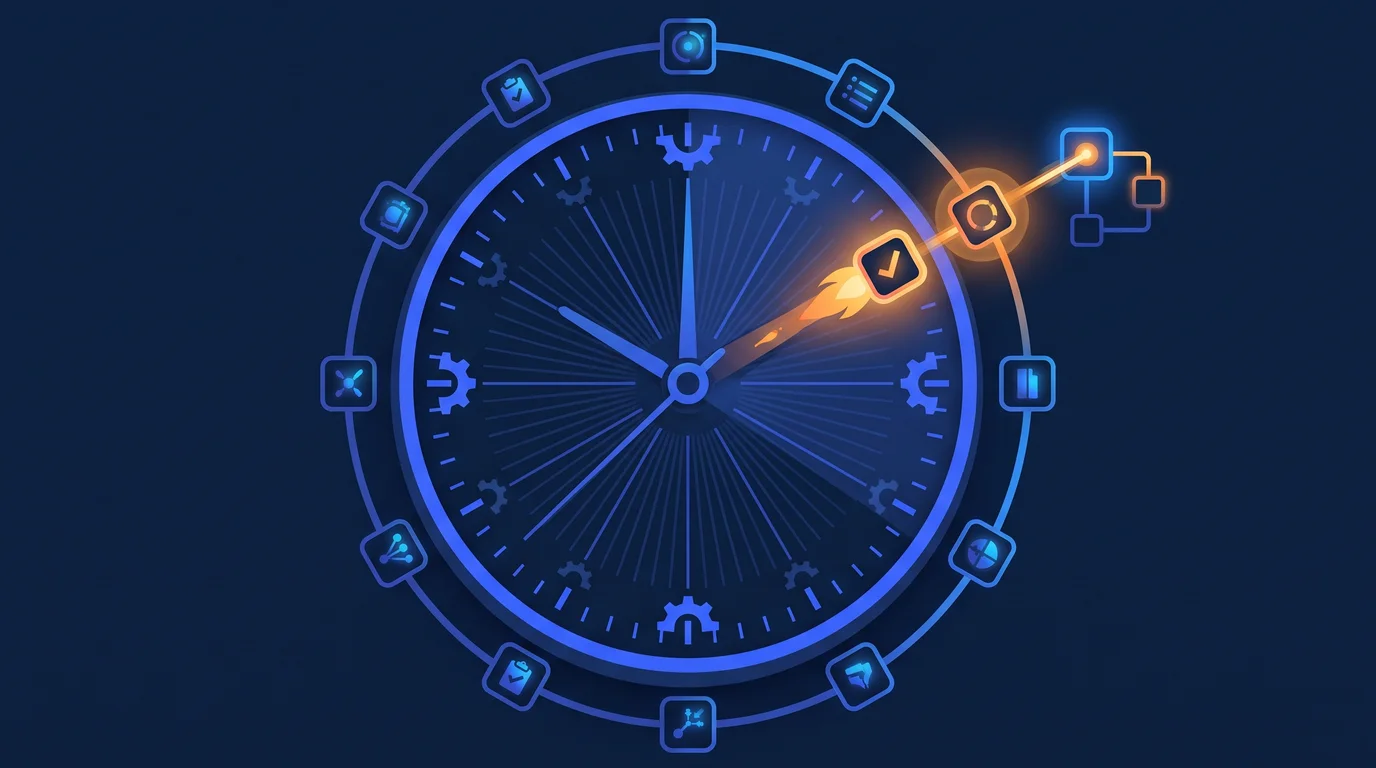
There are teams that manually prepare the same report every morning, manually back up the database every night, and individually check data between two systems every week. These tasks are time-consuming and, precisely because they are routine, they are prone to human error. Moreover, when they are forgotten — and they do get forgotten — the consequences sometimes go unnoticed for days.
Our Solution Approach
We move repetitive, time-dependent tasks to a reliable background infrastructure. With a cron job or scheduled task infrastructure, designated operations run at the right time, in the right sequence, without human intervention. When an error occurs, the system does not remain silent; it instantly notifies the relevant person. Every execution is logged: when it started, how long it took, and whether it succeeded.
Scope & Features
- Automated reporting — Automatic generation of daily, weekly, or monthly operational and financial reports and delivery by email to relevant stakeholders
- Data synchronization — Periodic data reconciliation between two or more systems; alerts when inconsistencies are detected
- Database backups — Automated backup, compression, and secure transfer to S3, Backblaze, or on-premises storage
- Stock and price updates — Periodic synchronization of product prices and stock levels on marketplaces with the primary system
- Batch data processing — Intensive computation and data transformation operations that need to run at midnight or during low-traffic hours
- System maintenance tasks — Cache clearing, log rotation, deletion of old temporary files, session cleanup
- Monitoring and alert system — Instant notification via email, Telegram, or Slack when a task fails; no silent failures
- Management dashboard — An administration panel where you can visually monitor tasks, manually trigger them, and pause or resume them
Technical Standards
The task infrastructure developed in Python (APScheduler or Celery) or Node.js (node-cron) runs in isolation on Docker. Cron syntax provides flexibility at the minute, hour, day, or month level. Idempotency is mandatory for all tasks: running the same task twice does not create duplicate records or data corruption.
Who Is It For?
- Companies whose operational teams want to automate routine but critical tasks, targeting time savings and reduced error risk
- IT and software teams seeking a reliable, observable structure for infrastructure tasks such as reporting, backups, and synchronization
- Operations departments that are currently forced to manually perform data synchronization with marketplaces or ERP systems every day
Expected Outcomes
- Teams freed from routine operational tasks gain measurable time savings on the order of hours per week
- Database backups and data synchronizations are never overlooked; disaster recovery scenarios are strengthened
- Data inconsistencies caused by human error are eliminated; systems always display the same data
- Infrastructure set up once continues to operate with minimal maintenance for years
Frequently Asked Questions
How do we find out if a scheduled task fails?
When a task fails, an instant notification is sent to the relevant person via email, Telegram, or Slack; there are no silent failures. Every execution is also logged: when it started, how long it took, and whether it succeeded.
Will data be corrupted if the same task accidentally runs twice?
No. Idempotency is mandatory for all tasks, which means running the same task twice does not create duplicate records or data corruption. The task infrastructure runs in isolation on Docker.
Can we manage the tasks ourselves?
Yes, through a management dashboard where you can visually monitor tasks, trigger them manually, and pause or resume them. Scheduling is set with cron syntax at the minute, hour, day, or month level.
Where are database backups stored?
Backups are created and compressed automatically, then transferred securely to S3, Backblaze, or on-premises storage. Because backup runs as a task like any other, a notification is sent if it fails.
Clarify This Need
Share the current process, the system you use and the outcome you expect. We will turn it into a practical first scope.
Discuss the SolutionWhatsApp UsProjects Where We Used This Service
Modular Windows diagnostics and repair tool with PowerShell 5.1. 11+ modules, network diagnostics, system cleanup and single-script self-healing approach.
MSSQL XML Agent: ERP Automation AgentPortable Windows automation agent that exports XML from MSSQL databases for ERP flows, with scheduling and a web management UI.