
Services
Webhook & Event-Driven Architecture
Real-time data transfer between systems. Event-driven architecture with real-time integration and low latency.
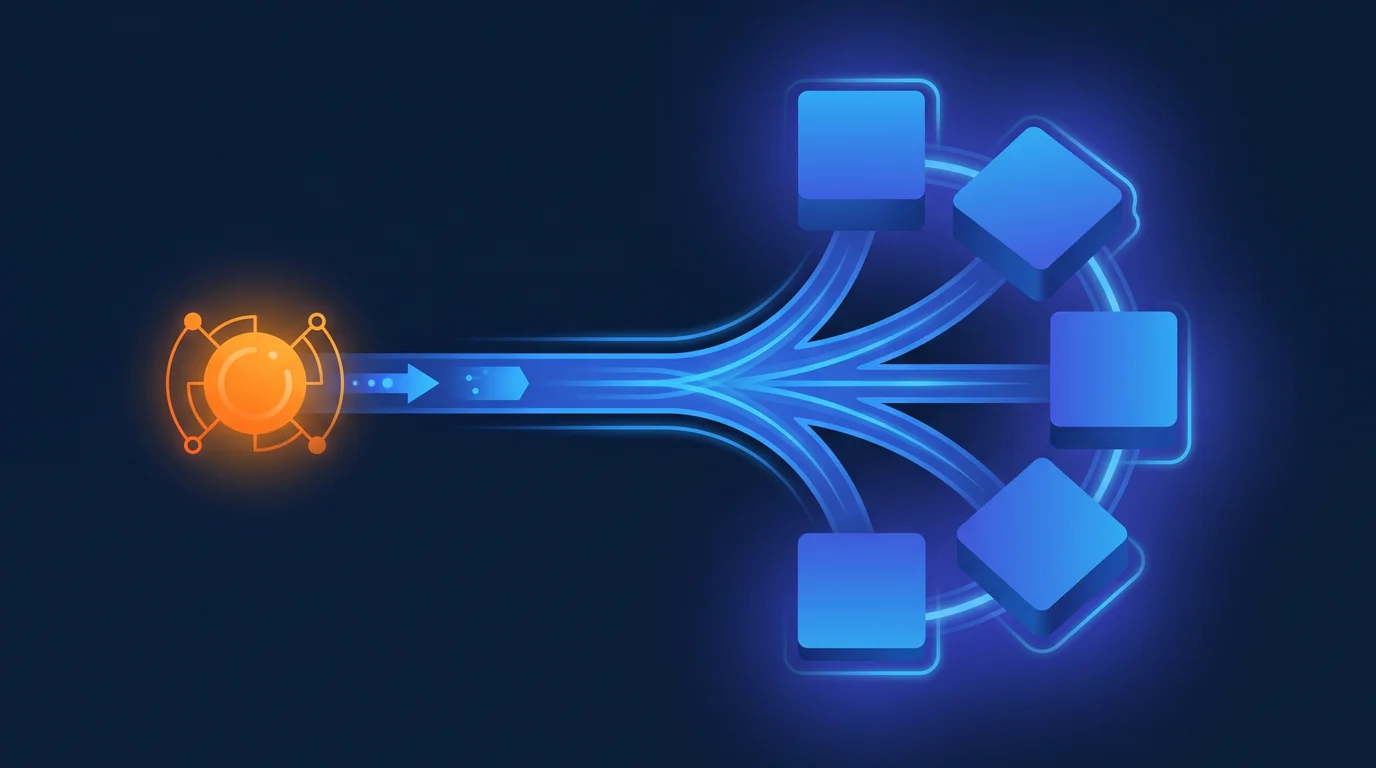
Data synchronization running hourly or daily is sufficient for many scenarios, but some business processes require an instant response. A payment confirmed and processed in the order system within seconds; an automatic alert sent to the supplier’s system before stock runs out; a lead from a form dropped into the CRM and immediately assigned to a sales representative — all of these require “now,” not “tomorrow.”
Our Solution Approach
We provide instant, reliable data transfer between systems using webhooks and event-driven architecture. An event occurring in one system — new order, payment confirmation, status change, user action — is immediately relayed to other systems and connected processes are triggered. Reliability is the priority in architectural design: what happens when event delivery fails is planned from the very beginning.
Scope & Features
- Webhook listener development — Secure HTTP endpoints that receive, validate, process, and respond to incoming events
- HMAC signature verification — Cryptographic verification that incoming webhook payloads genuinely originate from the expected source; fake requests are rejected
- Payment and order webhooks — Payment confirmation, order creation, invoice generation or shipping flow events are triggered instantly
- Marketplace event integration — Order status updates, shipping notifications and stock synchronization events
- CRM and form triggers — Assignment, notification and follow-up flows when a new record arrives
- Event queue architecture — Redis or RabbitMQ-based message queue to process high volumes of events without dropping any; sudden traffic spikes do not slow the system
- Retry and dead letter queue — Automatic retry on temporary failures; permanently failed events are kept on record
- Logging and monitoring — A timestamped, status-tagged record of every event; which events were processed, which failed, and what the error was
Technical Standards
Webhook listeners developed in Node.js run on Express or Fastify. For low-volume projects, a simple HTTP listener is sufficient; for high-traffic systems, a Redis Pub/Sub or RabbitMQ queue architecture is implemented. All webhook endpoints are delivered with HTTPS enforced, HMAC verification active, and rate limiting active.
Who Is It For?
- E-commerce and SaaS businesses that require instant processing of critical events such as payments, orders, or form submissions
- Organizations that want to synchronize multiple systems in real time and find that periodic synchronization is too slow
- Teams that receive webhooks from third-party services (payment provider, marketplace, CRM) and need secure infrastructure to process these events
Expected Outcomes
- Critical business events are processed instantly; second-level response instead of hourly synchronization
- Operational errors caused by delays (duplicate orders, stock errors, unassigned leads) are eliminated
- Systems work in parallel without waiting for each other; bottlenecks and sequential dependencies are reduced
- With a record kept of every event, when a problem occurs, what happened and when is immediately traceable
Frequently Asked Questions
What is the difference between webhooks and periodic data synchronization?
Periodic synchronization pulls data at fixed intervals, hourly for example; after an event happens you have to wait for the next run. With a webhook the event is relayed to the other system the moment it occurs and the connected process is triggered. That difference matters for work that needs an instant response, such as payment confirmation, order creation or lead assignment.
What happens if event delivery fails?
This scenario is planned from the very beginning of the architectural design. Temporary failures trigger an automatic retry, and permanently failed events are kept on record in a dead letter queue. Because every event has a timestamped, status-tagged record, you can trace which events were processed, which failed and what the error was.
How do you prevent fake requests being sent to our webhook endpoint?
Incoming webhook payloads are cryptographically verified with an HMAC signature; requests that do not originate from the expected source are rejected. All webhook endpoints are delivered with HTTPS enforced and rate limiting active.
Does every project need a queue architecture?
No. For low-volume projects a simple HTTP listener is sufficient. For high-traffic systems, a Redis Pub/Sub or RabbitMQ-based queue architecture is applied so that events are not dropped during sudden spikes; which one is needed depends on volume.
Clarify This Need
Share the current process, the system you use and the outcome you expect. We will turn it into a practical first scope.
Discuss the SolutionWhatsApp Us