
Services
Accounting Software Integration
Connect accounting, e-invoice, payment and stock data into an automated, traceable and reliable operational flow.
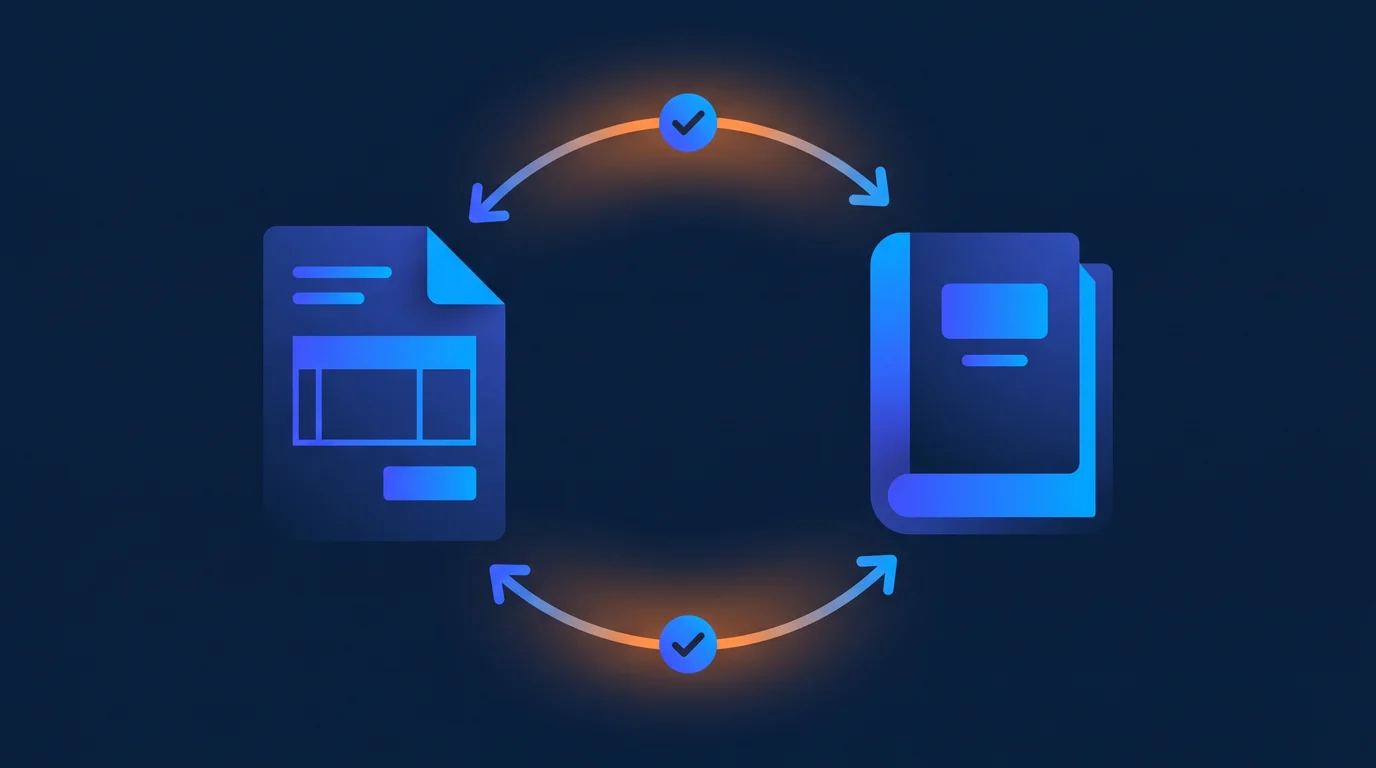
Manually transferring invoice and payment data from a sales system, e-commerce platform, or CRM into accounting software becomes a full-time workload in large-scale operations. With every manual transfer, the risk of inconsistency and error increases; period-end closings take progressively more time, and balance discrepancies between the accounting and operations teams turn into a chaos that takes hours to resolve.
Our Solution Approach
At Barlas Dijital, we build bidirectional, automated data bridges between operational systems and accounting software. When an order is created, an invoice is issued; when a payment is received, a collection is recorded; when a stock movement occurs, the accounting side is updated — all automatically and in a logged process. We record every transfer, send instant alerts on errors, and make it possible for the accounting team to see what was processed and when.
Scope & Features
- Accounting system integration — Bidirectional synchronization of invoice, collection and stock-entry data
- Commercial software integration — Matching sales, order, account and product data with operational systems
- Cloud accounting transfer — Automatic data transfer to API-supported accounting platforms
- e-Invoice / e-Archive integration — GIB-compliant electronic invoice generation and accounting entry
- Virtual POS and bank notification integration — Automation of payment and collection tracking
- Stock entry/exit synchronization — Reflecting stock movements into cost and accounting records
- Current account reconciliation — Automatic balance verification between the operational system and accounting
- Error management and logging — Transfer errors are reported with instant notifications; full record-keeping
Technical Standards
The integration layer is written in Node.js or Python; workflows managed through the n8n automation engine can be modified quickly when needed. Idempotency is ensured for every integration: designed to prevent the same data from being recorded twice. For accounting software without an API, database-level integration alternatives are evaluated.
Who Is It For?
- E-commerce and retail businesses generating hundreds of daily invoices or collection entries
- SMBs losing time to data inconsistencies between accounting and operations teams
- Businesses of any scale subject to e-invoice obligations who want to automate the process
Expected Outcomes
- The accounting team is freed from double data entry and can focus on analysis and reporting
- Period-end closings accelerate significantly; inconsistencies are caught in real time
- Invoice and balance discrepancies caused by human error are systematically eliminated
- Financial reporting reliability improves and management can access up-to-date data at any time
Frequently Asked Questions
Our accounting software has no API, is integration still possible?
On API-supported cloud accounting platforms the transfer runs directly through the API. For software without an API, we evaluate database-level integration alternatives. We cannot say which one applies to your software without examining it, so we clarify that in a call.
Can the same invoice be recorded twice by mistake?
Idempotency is ensured for every integration, meaning the system is designed to prevent the same data from being recorded twice. Because every transfer is logged, you can also see which record was processed and when.
How do we find out when a transfer fails?
Transfer errors are reported with instant notifications and every transfer is logged. The accounting team can see what was processed and when, instead of hunting for the error manually.
Is the e-invoice process included in the scope?
Yes, GIB-compliant e-Invoice and e-Archive generation and their accounting entries are in scope. Payment and collection tracking through virtual POS and bank notifications can also be automated.
Clarify This Need
Share the current process, the system you use and the outcome you expect. We will turn it into a practical first scope.
Discuss the SolutionWhatsApp UsProjects Where We Used This Service
A digital ecosystem that connects e-commerce, marketplace, ERP, inventory, product feed and iOS/Android mobile app flows through one data layer.
MSSQL XML Agent: ERP Automation AgentPortable Windows automation agent that exports XML from MSSQL databases for ERP flows, with scheduling and a web management UI.