
Services
Notification System Integration
Build reliable multi-channel notification infrastructure for push, SMS, WhatsApp and email, managed from one central service.
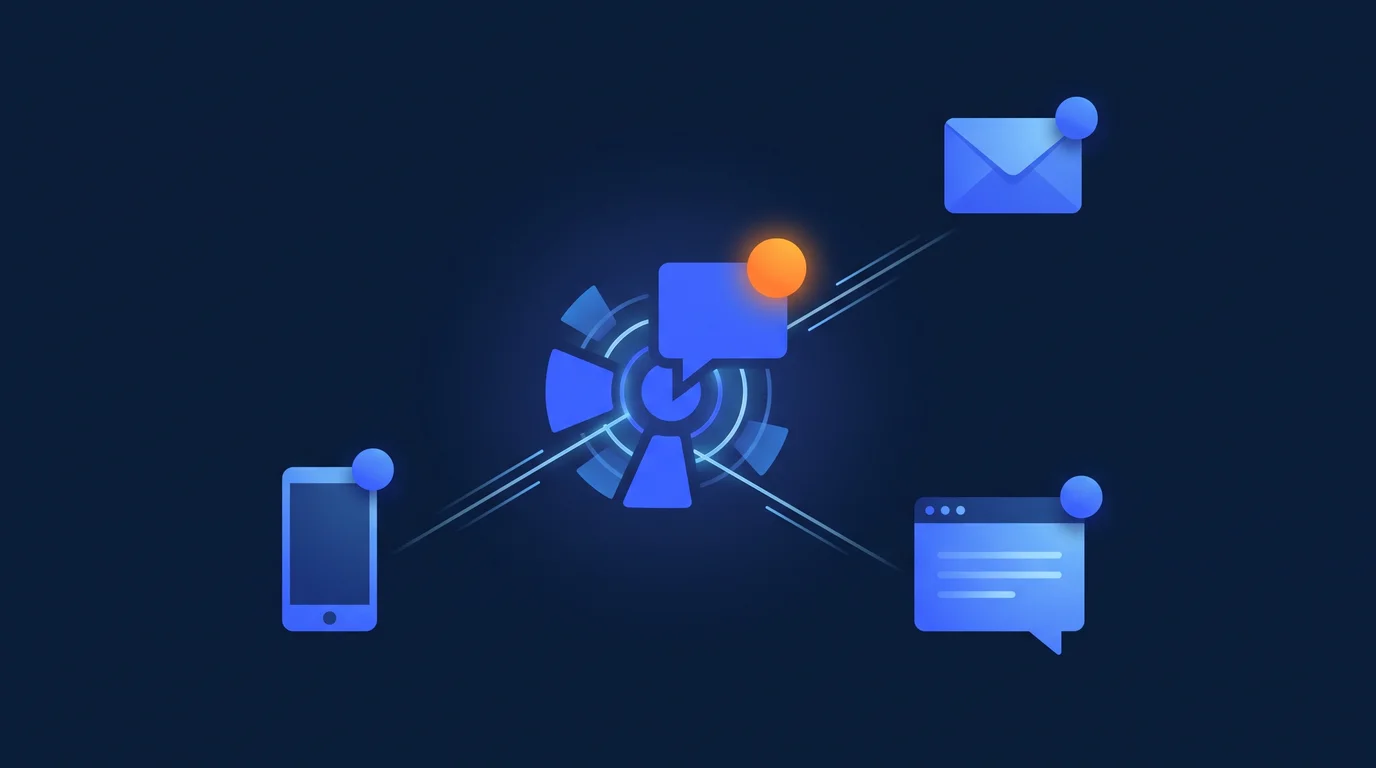
Delivering order updates, appointment reminders, or critical system alerts to customers requires each channel to be coded and managed separately. One service for SMS, another for email, a separate integration for push notifications — and all of them require maintenance. On top of that, some users never check their email, some want to receive SMS, and others are only active on WhatsApp. A message that doesn’t reach the user through one channel is effectively an undelivered message.
Our Solution Approach
We bring different notification channels together in a single centralized abstraction layer. Your application’s code no longer needs to know which channel is being used — when you want to send a message, the system knows which channel to try, what to do if it doesn’t get through, and how to report the delivery status. User preferences are stored in the system; everyone receives notifications through their preferred channel.
Scope & Features
- Push notifications — iOS and Android app notifications via Firebase Cloud Messaging (FCM); segmentation, scheduling and title/content management
- SMS integration — Short message delivery via Twilio, Netgsm, or Iletimerkezi; OTP, notification, and campaign sending
- WhatsApp Business API — Official business communication with Meta-approved template messages; order notifications, appointment reminders, or customer support
- Transactional email — Resend, SendGrid, or Amazon SES; one-time messages tied to system events
- In-app notifications — Real-time in-app notifications based on WebSocket or polling; read-status tracking and notification history
- Fallback chains — If push fails, try SMS; if SMS fails, send email; critical messages always reach the recipient
- User preference management — Users choose which type of notification to receive via which channel; preferences are stored in the system
- Delivery reports and tracking — Sent, delivered, opened, clicked; the performance of each channel is available in trackable reports
Technical Standards
The notification abstraction layer is developed in Node.js; adding a new channel does not require modifying existing code. Template management works channel-independently: the same template is converted into the appropriate format and sent across different channels. Service account management and token renewal for FCM integration are automated.
Who Is It For?
- E-commerce and service businesses that communicate order, shipping, or appointment information to customers and want to do so across multiple channels
- Software teams that want to instantly relay critical system events (alarms, errors, actions requiring approval) to operators or administrators
- Product teams that want to build push notification and in-app notification infrastructure for their mobile or web applications
Expected Outcomes
- The delivery rate of critical notifications increases; fallback chains ensure that a single channel failure cannot block the message
- Customers receive timely information via their preferred channel; communication satisfaction improves
- Operational alerts are never missed; errors or critical situations reach the relevant person instantly
- The maintenance burden of managing multiple channels is reduced to managing a single service through the centralized abstraction layer
Frequently Asked Questions
How exactly does the fallback chain work?
If the message does not get through on the first channel, the system tries the next one: if push fails, SMS; if SMS fails, email. That way a single channel failure does not mean the message never arrives. The order of the chain is decided based on how critical the notification is.
Which notification services do you work with?
Firebase Cloud Messaging for push, Twilio, Netgsm or Iletimerkezi for SMS, and Resend, SendGrid or Amazon SES for email. On the WhatsApp side, Meta-approved Business API template messages are used. Which service fits best depends on your existing infrastructure.
Can users choose which notification they receive on which channel?
Yes. User preferences are stored in the system; everyone decides which type of notification they want on which channel. Your application code does not need to know about this choice — the central notification layer makes the channel decision.
Can we see whether a notification actually reached the recipient?
Sent, delivered, opened and clicked statuses are tracked in delivery reports. Because each channel is measured separately, the data shows which channel actually works for your audience.
What is involved if we want to add a new channel later?
The notification abstraction layer is built in Node.js, and adding a new channel does not require modifying existing code. Template management is channel-independent too; the same template is converted into the right format for each channel before sending.
Clarify This Need
Share the current process, the system you use and the outcome you expect. We will turn it into a practical first scope.
Discuss the SolutionWhatsApp UsProjects Where We Used This Service
REST API-based dynamic QR code management platform with PHP Slim 4. PHPMailer integration, form management and tracking system.
Noor: Multilingual Mobile ApplicationCross-platform mobile app with 20+ language support. React Native + Expo, i18next, RTL support, NativeWind and Zustand state management.
Senkora: Order and Integration Operations PanelAn operations interface that brings marketplace, e-commerce, accounting and shipping connections into one panel: order flow, invoice status, sync health.
Stacko: Cross-Platform Mobile ApplicationTypeScript-based cross-platform mobile application with Vite 7 + Capacitor 8 + Firebase. Native features, ESLint+Prettier standards.